Winter Desert Packing List for Tunisia
What to pack for a Sahara day trip or desert-camp night from Djerba between November and February: layers for cold nights, hot-spring kit, sand protection, cash and ID rules, and what to leave behind.
Pack for two seasons in one day. Between November and February the desert around Ksar Ghilane and Douz warms to the high teens or low twenties by day and drops to single figures at night, sometimes close to freezing. You need light layers that keep the sun off in the afternoon, a proper warm jacket and something warm to sleep in at the camp, a swimsuit for the hot spring and a scarf against the sand.
Check Availability
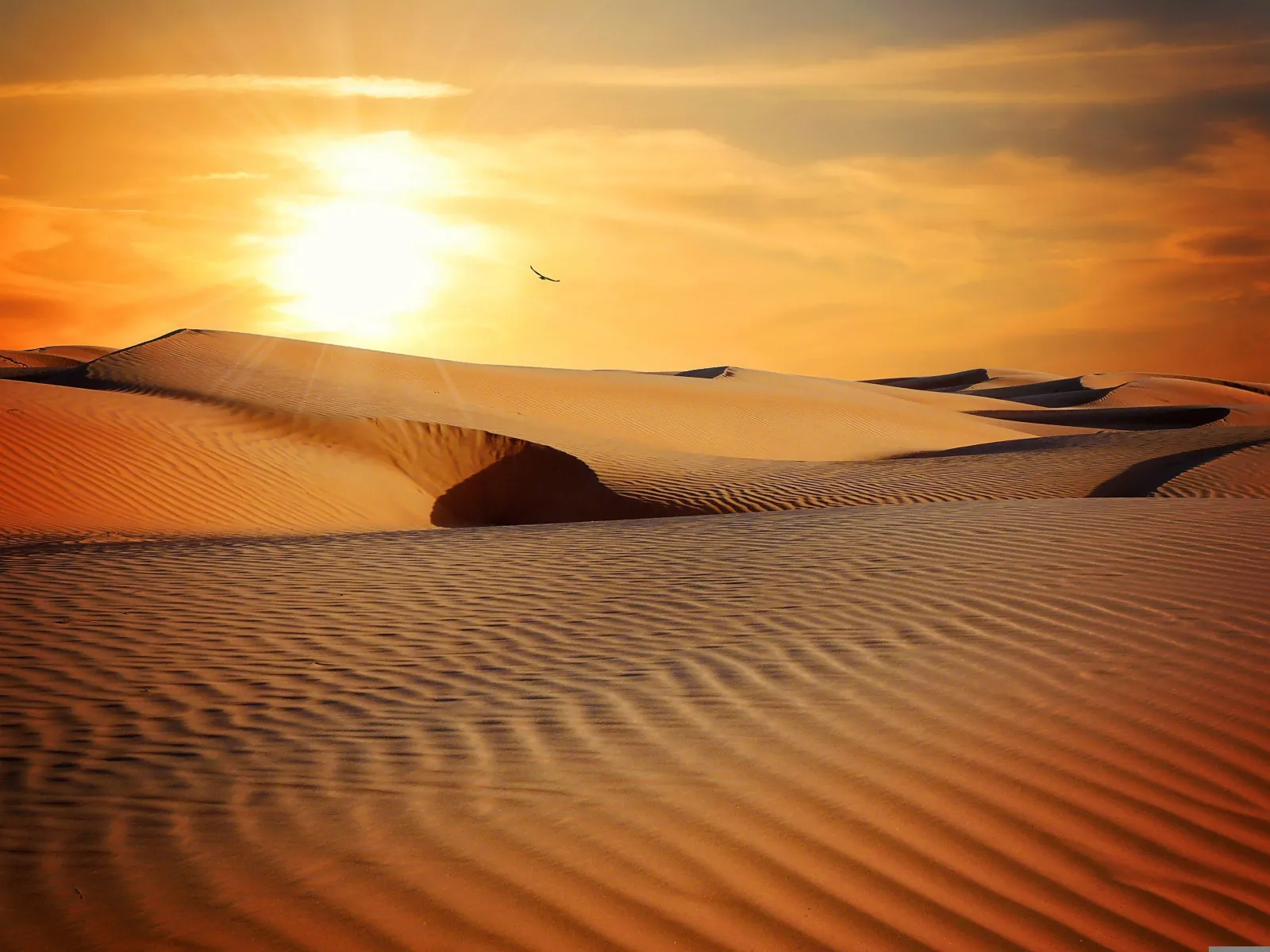
The list below works for a day trip or a two-day camp tour from Djerba, with the reason for every item so you can cut what you don’t need. If you have not picked a trip yet, start with a day trip or a two-day tour.
The checklist
Clothing
- Packable down or synthetic puffer jacket
- Fleece or other warm mid-layer
- Merino or thermal base layer, top and leggings, to sleep in
- Two pairs of long trousers, one comfortable pair for the camp
- Two long-sleeved tops and one T-shirt
- Warm hat and light gloves
- Thick socks for the night, plus everyday socks
- Closed trainers or walking shoes, plus flip-flops or sandals
Sun, sand and the spring
- Desert scarf (shemagh) or a buff
- Sunglasses, wraparound if possible
- Sunscreen SPF 30 to 50 and SPF lip balm
- Sun hat or cap
- Swimwear and a quick-dry microfibre towel
- Dry bag or plastic bag for wet swimwear
Camp and comfort
- Head torch and spare batteries
- Sleeping-bag liner, or a light sleeping bag in December and January
- Earplugs and an eye mask
- Power bank (10,000 to 20,000 mAh) and charging cables
- Type C/E plug adapter if your plugs are not European
Health and toiletries
- Wet wipes, tissues and a small roll of toilet paper
- Hand sanitiser
- Moisturiser and eye drops for the dry air
- Motion-sickness tablets or wristbands
- Personal medication and a small first-aid kit
- Reusable water bottle and a few snacks
Money and documents
- Passport, or at least a copy of the photo page; check with your operator
- Tunisian dinars in small notes for tips and extras
- Exchange receipts
- Travel insurance details, with a copy saved offline
Winter desert weather, month by month
These are approximate long-term averages for the Douz, Ksar Ghilane and Matmata area. Climate databases don’t fully agree, so treat them as a range, not a forecast.
| Month | Average high | Average low | Daylight | What it feels like |
|---|---|---|---|---|
| November | About 20 to 24°C | About 9 to 14°C | About 10.5 hours | Warm afternoons, cool evenings; a jumper and a light jacket |
| December | About 16 to 18°C | About 4 to 9°C | About 10 hours, the shortest days | Crisp; nights feel cold in a fabric tent |
| January | About 15 to 18°C | About 4 to 8°C | About 10 to 10.5 hours | The coldest month; frost is possible at night |
| February | About 17 to 19°C | About 5 to 9°C | About 11 hours | Longer days, still cold after dark |
The averages hide a few things:
- Cold extremes happen. Douz recorded a low of around −4°C in January 2005, and tour operators at Ksar Ghilane warn that winter nights are sometimes 0°C.
- It feels colder than the number. Desert air loses its heat fast after sunset, and travellers describe camp nights as cold and damp, with dew on everything by morning.
- Rain is rare but possible. Expect about two rainy days a month in winter. Showers are usually brief, but they make a windproof outer layer worth carrying.
- The sun is weaker, not weak. The average maximum UV index at Douz in December is only about 3, but you are outside all day, the sand reflects the light, and the dry wind dries skin and lips quickly.
- Wind lifts the sand. Even in winter, a breezy afternoon on the dunes means sand in your eyes, ears and camera.
Clothing: three layers
Forget a special desert outfit. Pack three layers you can add or take off in a moving 4x4:
- Base layer: a long-sleeved merino or synthetic thermal top and leggings. You may not wear it by day in November, but it is what you sleep in at the camp.
- Mid layer: a fleece or warm jumper, for the campfire after dinner.
- Outer layer: a packable down or synthetic puffer. It squashes into a daypack, weighs almost nothing and lets you stay out under the stars instead of retreating to the tent.
By day, long loose trousers and a long-sleeved shirt are more comfortable than shorts: they keep off the sun, the rub of a camel saddle and the sand on a quad. Add a hat and thin gloves for the evening and for sunrise, the coldest hour of the trip. Wear closed trainers for the villages and the dunes, and bring flip-flops or sandals for the spring and the shower block.
Sleeping at the camp: what’s provided and what isn’t
Most two-day tours from Djerba sleep at or near Ksar Ghilane. The camps differ a lot, and that changes what you need to bring.
Standard camps, such as Campement Zmela in the dunes 20 to 40 minutes by 4x4 from the oasis, have tents with real beds, sheets and heavy blankets, clean shared bathrooms with hot showers and, in many cases, a socket in the tent. A January reviewer called it “cold in January but lots of blankets”. What you don’t get is heating, insulation behind the fabric walls, a warm walk to the toilet block at 2am or, at some camps, towels.
Comfort camps, such as Campement Yadis, have around 60 large tents with private bathrooms and individual air-conditioning units that also heat. Even there, winter guests have reported cold nights, heaters that did not work well and too few blankets. Ask the staff to show you how the heater works when you check in.
Pack for it:
- A sleeping-bag liner adds a few degrees of warmth and a clean layer between you and shared bedding. If you sleep cold, a light sleeping bag earns its space in December and January.
- A thermal base layer, socks and a warm hat to sleep in.
- A head torch. Camp paths are dark, and camps that run on generators may cut the power late at night.
- Earplugs and an eye mask for generators, dogs, other guests and an early sunrise call.
The desert camps guide compares the camps in more detail. On the sunset and sunrise tent night, $144 and rated 4.7/5 from about 600 reviews, you sleep in a fixed Berber tent and are back in Djerba late the next morning, so one soft bag is enough.
Hot spring kit
The natural spring in the Ksar Ghilane oasis is warm, around 32 to 35°C in the bathing pool according to local operators, and you can swim in it all year. In winter the hard part is getting out.
- Swimwear: a modest one-piece or swim shorts, because the spring is a public, family place
- A quick-dry microfibre towel, as the camp may not provide one
- Flip-flops or water shoes for the path and the slippery edges
- A warm layer waiting on the bank for when you climb out
- A dry bag or zip bag for wet swimwear
The Ksar Ghilane hot spring guide covers when to go in and what the pool is like.
Sun and sand protection
- A desert scarf (shemagh) or buff is the most useful single item. It keeps sand out of your mouth on a quad, warms your neck at night and covers your head on a camel. Many operators recommend one, and you can buy one cheaply in the souk.
- Sunglasses. Wraparound styles keep out blown sand. Quad operators usually lend goggles, but not always.
- Sunscreen SPF 30 to 50 and SPF lip balm.
- A cap or sun hat for the middle of the day.
Camel rides cost around €15 an hour and quad rides around €30 at Ksar Ghilane, paid on site in cash. Our Djerba desert tour costs guide lists the other extras.
Phones and cameras
- A power bank. Cold drains batteries faster, sockets in the tent may be shared or switched off at night, and you will want your phone at sunrise. A 10,000 to 20,000 mAh bank charges a phone two to four times.
- A plug adapter. Tunisia uses Type C and E sockets at 230V/50Hz. Travellers from the UK, US and Australia need an adapter, and US travellers should check their devices are rated 100 to 240V.
- A sand-proof phone pouch or zip bags for phones and cameras on the dunes.
- A lens cloth and a blower. Avoid changing lenses in the wind.
- Offline maps and downloads. Mobile signal is patchy near the oasis and close to nothing out in the dunes.
Health and toiletries
- A motion-sickness remedy. Djerba to Ksar Ghilane is roughly four hours each way, including bumpy track.
- Wet wipes, tissues and a small roll of toilet paper. Roadside cafés and some stops have basic toilets.
- Hand sanitiser.
- Moisturiser, lip balm and eye drops, because the desert air is very dry.
- All your own toiletries. Reviewers of two-day tours advise bringing everything to the camp.
- A reusable water bottle and snacks. Bottled water is sold everywhere; drink that, not tap water.
Money and documents
- Dinars, bought in Tunisia. The Tunisian dinar is a closed currency, and taking dinar notes or coins into or out of the country is prohibited. Change money at Djerba airport, a bank or your hotel, and keep the receipt, because you need it to change leftovers back.
- Foreign cash. Tunisian Customs requires a declaration on arrival if you bring in the equivalent of 20,000 dinars or more, or if you want to take more than 5,000 dinars’ worth back out. Most tourists carry far less.
- Small notes for the desert. Tips, drinks at about 3 dinars each at the oasis, souvenirs, camel and quad rides. Don’t count on a cash machine at Ksar Ghilane; withdraw in Djerba before you leave. Cash-machine receipts generally aren’t accepted when you change dinars back, so use a bank counter or an official exchange if you expect to have some left.
- ID. The UK FCDO’s Tunisia advice says foreign nationals must carry ID, such as a copy of the photo page of their passport, and that you may meet police or military checkpoints. Carry your passport or at least a copy of the photo page, as your operator advises.
- Travel insurance that covers quad biking if you plan to ride. The FCDO notes that safety standards on quad bikes vary considerably and advises always wearing a helmet. Our Djerba desert tour safety guide covers the rest of the official advice.
Luggage: leave the suitcase in Djerba
Hard suitcases are awkward in the back of a 4x4 and pointless at a camp. Most tours let you leave your main luggage at your Djerba hotel; check when you book. Take:
- A soft holdall or a 25 to 35 L backpack for the night
- A small daypack for water, sunscreen, scarf and camera
- A waterproof stuff sack to keep tomorrow’s clothes dry from dew and sand
Day trip or overnight: what changes
| Day trip | Two-day tour | |
|---|---|---|
| Warm jacket | A light jacket or fleece; you are back by evening | Essential: a puffer and a fleece |
| Sleepwear and liner | Not needed | Thermal layer, liner, socks, warm hat |
| Swim kit | Yes | Yes |
| Head torch | Optional | Essential |
| Power bank | Useful | Essential |
| Toiletries | Wipes and sanitiser | The full kit and a towel |
| Bag | A daypack | A soft holdall and a daypack |
A day trip still means a start before sunrise, when it is cold, and a long drive back after dark, so take the fleece anyway. The Ksar Ghilane and Tataouine 4x4 day tour, $69 and rated 4.8/5 from more than 1,700 reviews, picks up around 6am.
What women might wear
Djerba’s resorts are relaxed, but the villages on the desert route, Matmata, Tataouine and Chenini, are more traditional, and the custom in remote areas is to dress modestly. Covering your shoulders and knees is respectful and also practical against sun and sand.
- Loose long trousers, or a maxi skirt with leggings
- Long-sleeved tunics or shirts with a modest neckline
- A large scarf that covers your shoulders, keeps off the sand and warms you in the evening
- A one-piece swimsuit or a cover-up for the spring
You don’t need to cover your hair, except at some religious sites.
What not to pack
- Only hot-weather clothes. The most common complaint in winter reviews is a cold night.
- A hard suitcase and lots of outfits.
- Expensive jewellery, and anything you would hate to fill with sand.
- Dinars bought abroad, which you cannot legally bring in.
- Shorts as your only trousers. They are impractical on camels and quads, and out of place in the villages.
- A drone. Bringing one into Tunisia without authorisation is illegal; drones are confiscated on arrival and kept until you leave.
- Plans that rely on cards or signal at the oasis.
Gear to look for
These are product types, not brands; choose any reputable make that fits your budget.
- Packable down or synthetic puffer: one that squashes into its own pocket
- Fleece mid-layer: 200-weight is a good balance for a winter desert
- Merino base-layer set: warm, low-odour sleepwear
- Buff or neck gaiter: for quads and cold mornings
- Shemagh or desert scarf: a large cotton square
- Rechargeable head torch: a red-light mode avoids waking the rest of the tent
- Power bank (10,000 to 20,000 mAh): check your airline’s limits for cabin bags
- Microfibre travel towel: dries fast after the spring
- Sleeping-bag liner: fleece or silk
- Waterproof, sand-proof phone pouch
- Wraparound sunglasses
- Sunscreen SPF 50 and SPF lip balm
- Insulated or reusable water bottle
- Motion-sickness acupressure bands
- Type C/E travel adapter
Frequently Asked Questions
How cold does the Sahara get at night in Tunisia in winter?
Average lows run from about 9 to 14°C in November down to about 4 to 8°C in January, and some nights fall to around 0°C or below. In a fabric tent it feels colder.
What should I wear at Ksar Ghilane in November?
Light long trousers and a long-sleeved top by day, a fleece and a light puffer for the evening, and closed shoes plus sandals for the spring. November is the mildest of the winter months, but the camp still gets chilly after dark.
Do desert camps provide blankets and towels?
Blankets, sheets and pillows are standard. Towels are not always provided, so bring a microfibre towel.
Is there electricity and phone signal at the camp?
Most camps have sockets or a charging point, but the power may come from a generator or solar panels and be limited overnight. Mobile signal is weak or absent in the dunes, so download maps and something to read beforehand.
Can I swim in the hot spring in winter?
Yes. The water is around 32 to 35°C. Bring swimwear, a quick-dry towel, flip-flops and a warm layer for afterwards.
Do I need my passport on a Djerba desert tour?
Bring your passport or a copy of the photo page. There are police checkpoints in the south, and foreign nationals are required to carry ID.
Can I pay by card in the desert?
Rarely. Bring enough dinars in small notes from Djerba.
Do I need a sleeping bag?
Usually not. A liner is enough for most people from November to February. If you sleep cold or are travelling in late December or January, bring a light sleeping bag.
Ready for the desert
Winter is a good time for the Tunisian Sahara: mild days, quiet dunes and a sky full of stars. Pack light layers for the day, real warmth for the night, a scarf against the sand and swimwear for the spring. Late-December visitors can time the trip for the Douz Sahara Festival, 23 to 26 December 2026. The best Sahara tours from Djerba ranks the trips by budget, and the Star Wars locations guide covers the film sets on the way south.
- Two-day tour via Tataouine, Chenini and Ksar Ghilane with a camp night: Djerba: Sahara 2 Day 4x4 Tour & 1-Night Desert Camp Night, listed from $48
- Sunset and sunrise with a tent night: From Djerba: Sunset & Sunrise Desert by 4x4 with Tent Night, $144
- Full-day Ksar Ghilane and Matmata 4x4 tour: Djerba: Ksar Ghilane & Matmata 4x4 Sahara Guided Tour, $69
The Sahara, and Back to Your Hotel by Dark
Hotel pickup across Djerba and Zarzis, a 4x4 over the Dahar, the hot spring at Ksar Ghilane and lunch — rated 4.8/5 by more than 1,700 guests. Free cancellation up to 24 hours before.
Check Availability & Book